Prerequisites
Permissions to View/Edit Alerts Settings required
Overview
The Alert Threshold sets the baseline conditions that must be met for an alert to be generated. While the alert engine analyzes all transactions within the alert window, it will only generate an alert if the activity meets or exceeds the defined thresholds.
Most alerts begin with a detection criteria configuration that defines the core criteria for evaluation. For example, the Structuring alert type uses two threshold components:
A monetary range (e.g., $8,000 to $10,000 per gaming day)
A minimum number of days the pattern must occur
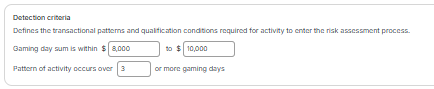
If a day’s total transaction amount is below $8,000 or above $10,000, the alert engine will still analyze the data but will not generate an alert for structuring unless the activity falls within that range and meets the other criteria.
While many alerts rely on a single dollar amount as the threshold, others (like structuring) require multiple detection criteria. Refer to the knowledge base articles for each alert type to understand how thresholds are applied specifically.
Thresholds on Active alerts
For Active alerts, thresholds are set for each alert type in Settings > Alerts (Beta). Choose the property at the top of the page, then open the alert type's card. Each card has four tabs, and three of them hold thresholds:
Detection criteria – The amounts and conditions that define the activity, such as the structuring range and minimum number of gaming days described above. Activity that meets them is recorded as an event.
Escalation qualification – The Escalation threshold, a Threshold score from 1 to 100. An event becomes an alert for analyst review only if its Confidence Score is at or above this score. Events below it are kept as non-escalated events and remain searchable for review.
Escalation prioritization – The High priority threshold. Alerts at or above this Confidence Score are marked High Priority and shown first.